
The hidden cost of "return to sender"
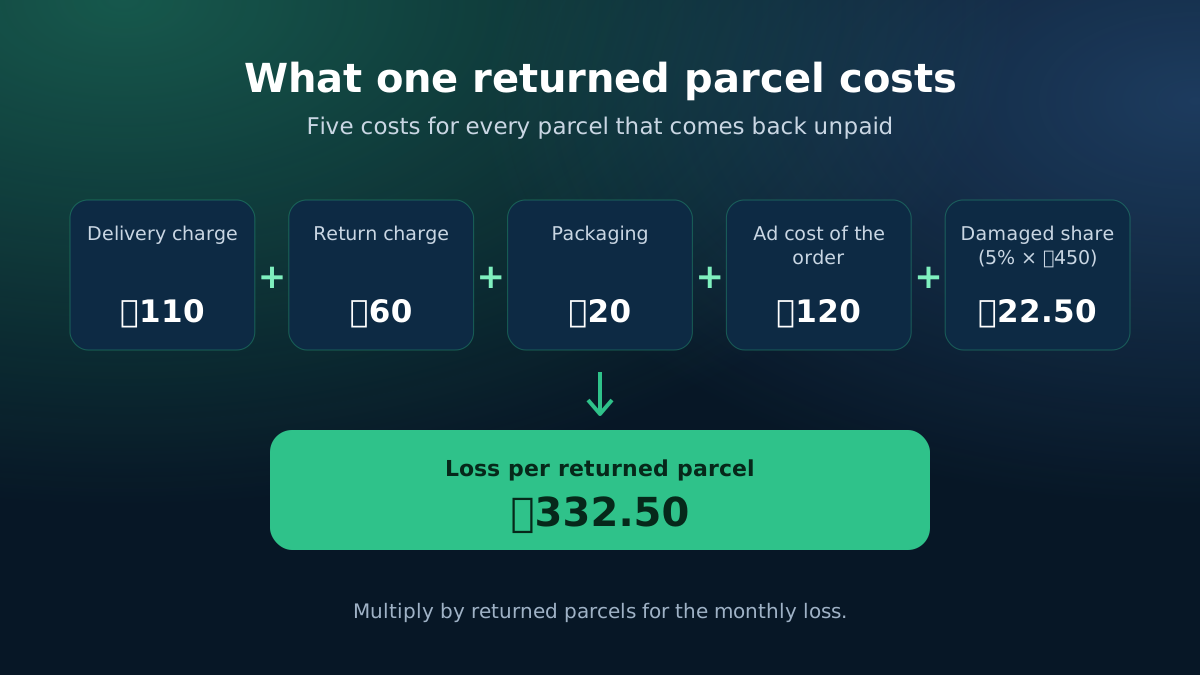
With cash on delivery, a refused or unreachable parcel brings no money and still costs plenty. You paid the courier to take it out, you often pay again to bring it back, the packaging is used, and the ad money spent to win that order is gone. If the item comes back creased, broken or missing a tag, you may not be able to sell it at full price either.
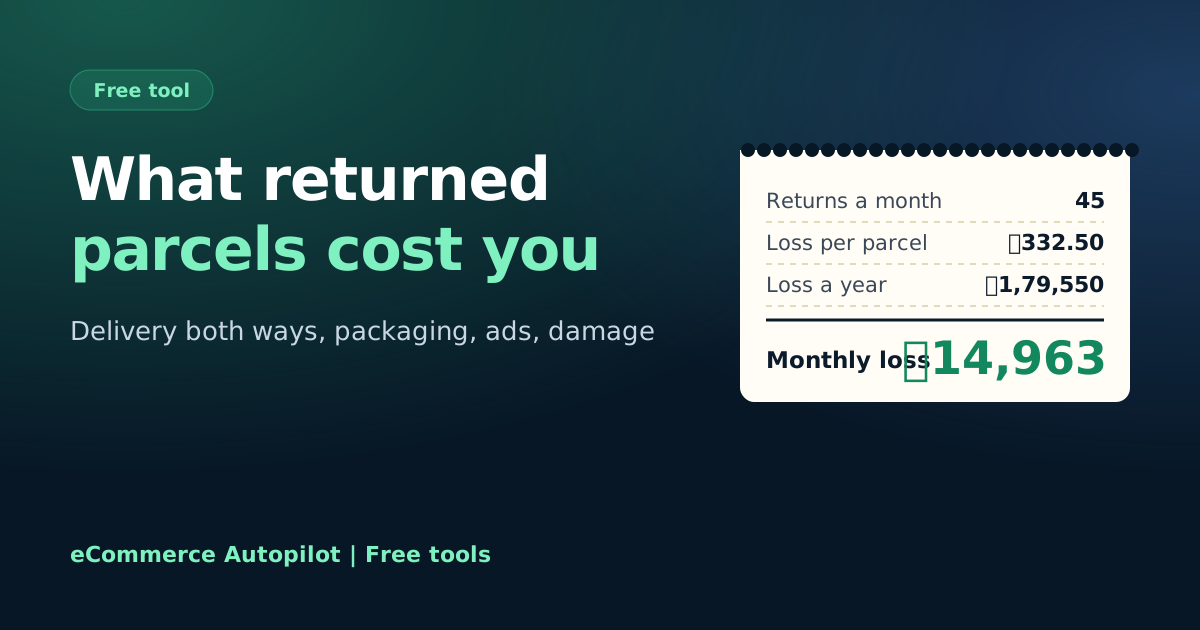
Because each return is a few hundred taka spread over many days, it is easy to miss how much it adds up to. This calculator shows the loss per returned parcel, per month and per year.
How the loss is worked out
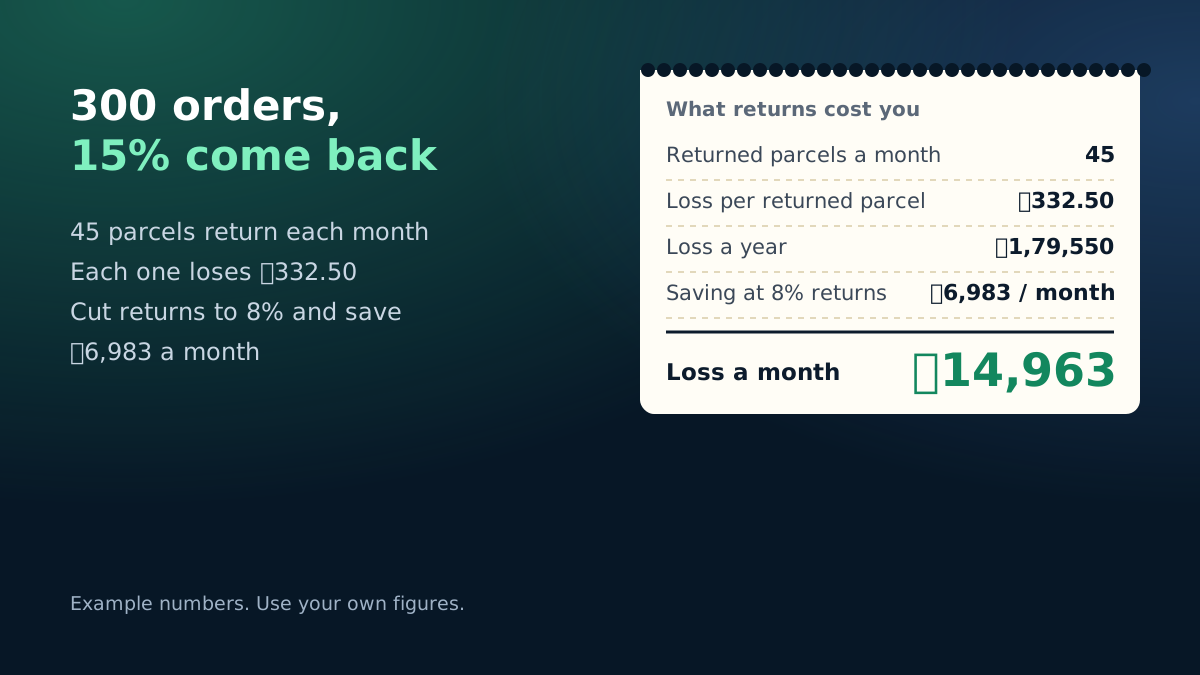
- Returned parcels = orders per month × return rate.
- Loss per returned parcel = delivery charge + return charge + packaging + ad cost per order + (damaged share × product cost).
- Monthly loss = returned parcels × loss per parcel, and the yearly figure is twelve months of that.
The target return rate shows the saving: the difference in returned parcels multiplied by the loss per parcel. This is often the cheapest profit a shop can find, because it needs no new customers.
Practical ways to bring returns down
- Call or message to confirm every order before booking it with the courier.
- Check a phone number's past deliveries with a courier fraud check before sending costly items.
- Show real photos, sizes and the total price including delivery, so nothing surprises the customer at the door.
- Ship quickly: the longer a customer waits, the more likely they change their mind.
Read the full guide on reducing courier returns. In eCommerce Autopilot, returned orders are tracked with their courier status, and the fraud check shows a customer's delivery record before you book.